Ocala Push-to-Start Vehicles: What Happens When the Key Isn’t Detected?
Ocala Push-to-Start Vehicles: What Happens When the Key Isn’t Detected?
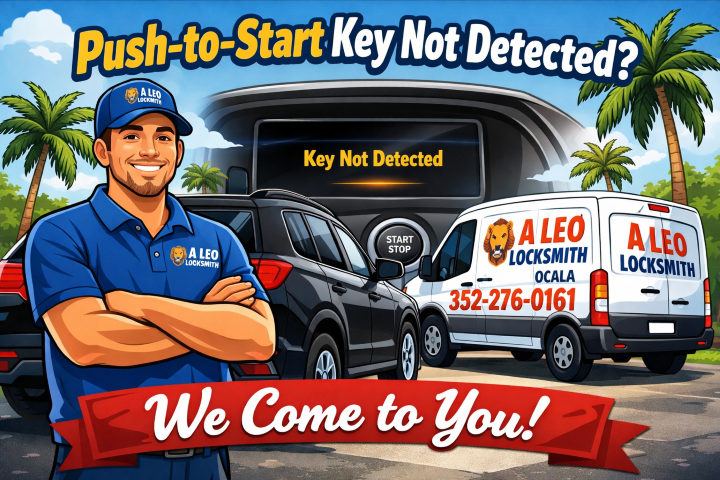
Push-to-start vehicles are everywhere in Ocala. From newer SUVs to modern sedans and trucks, proximity key systems have replaced traditional metal ignition keys. They’re convenient, fast, and easy — until you press the button and see the message:
“Key Not Detected.”
If you’ve experienced this, you know how frustrating it can be. The vehicle won’t start, the dashboard lights up, and you’re stuck wondering what went wrong.
Let’s break down what actually causes this issue — and what you should do next.
How Push-to-Start Systems Work
Push-to-start vehicles use a proximity key (also called a smart key or key fob). Instead of inserting a key into the ignition, your vehicle detects a coded signal from the key when it’s inside the car.
When you press the start button:
-
The car searches for the key’s signal.
-
The immobilizer verifies the encrypted chip.
-
If verified, the vehicle starts.
If any part of that communication fails, the car will not start.
Most Common Reasons Your Key Isn’t Detected
1. Dead Key Fob Battery
This is the most common cause.
Even if the buttons still work occasionally, the proximity function may fail when the battery weakens. Florida heat can shorten battery life, especially during Ocala summers.
Solution: Replace the battery first. It’s inexpensive and often solves the problem immediately.
2. Weak Vehicle Battery
Many drivers don’t realize this — a low car battery can interfere with proximity detection.
Push-to-start systems rely heavily on proper voltage. If your vehicle battery is weak, the system may not properly detect the key signal.
If you’re also noticing slow cranking or dim lights, test your car battery.
3. Key Fob Damage
Keys get dropped. They get wet. They get crushed in pockets.
Internal circuit board damage can interrupt the chip’s signal. Sometimes the lock/unlock buttons still work, but the transponder portion fails.
In this case, the key may need to be replaced and reprogrammed.
4. Antenna or Receiver Problems
Push-to-start vehicles have internal antennas that communicate with the key. If one of those antennas fails, the car may not detect the key even if it’s fully functional.
This is less common but does happen.
A professional diagnostic can determine whether the issue is with the key or the vehicle.
5. Signal Interference
Certain electronics, aftermarket alarm systems, or even other key fobs nearby can sometimes interfere with the signal.
If your key works sometimes but not others, interference could be the reason.
What You Should NOT Do
When your push-to-start key isn’t detected, avoid:
• Buying the cheapest key online without verifying compatibility
• Assuming the dealership is your only option
• Forcing the start button repeatedly
• Ignoring the issue until you’re fully stranded
Modern keys must match the correct frequency, chip type, and FCC ID. Guessing can cost more in the long run.
Temporary Emergency Start Tip
Many push-to-start vehicles have a backup method.
If the key battery is dead, you can often hold the key fob directly against the start button while pressing it. Some vehicles also have a hidden key slot in the center console.
Check your owner’s manual for your specific model.
This may allow you to start the car temporarily — but the underlying issue still needs to be fixed.
When It’s Time to Call a Professional
If replacing the battery doesn’t solve the issue, it’s time to have the key tested and diagnosed properly.
At A Leo Locksmith Ocala, we handle push-to-start key diagnostics and programming every day. We verify:
• Chip compatibility
• Frequency match
• FCC ID
• Vehicle communication
• Immobilizer function
In many cases, we can replace and program a new smart key on-site without towing your vehicle to the dealership.
Most push-to-start problems are either a failing key or programming issue — and both can often be resolved quickly by an experienced automotive locksmith.
Don’t Wait Until You’re Completely Locked Out
If your vehicle is intermittently saying “Key Not Detected,” that’s a warning sign. Smart keys rarely fail without giving early symptoms.
Addressing the issue early can prevent:
• Emergency lockouts
• Towing expenses
• After-hours breakdown stress
Push-to-start systems are convenient — but when they malfunction, they require the right tools and knowledge to diagnose correctly.
If you’re in Ocala and your push-to-start vehicle isn’t detecting the key, A Leo Locksmith is ready to help with professional mobile service and proper programming solutions.